Ever wondered how to choose the right wire rope for your industrial needs?
Wear resistance in wire ropes means they can handle surface abrasion and degradation over time, while fatigue resistance is about surviving repeated loading without breaking. These properties are crucial for ensuring long-lasting performance in tough environments.
I remember when I was first tasked with selecting wire ropes for a major project. It felt like diving into a world of specs and jargon. Understanding wear resistance and fatigue resistance was key, as these factors directly influenced our equipment's longevity. Delving deeper into these properties can make a real difference, especially when you're trying to match the right rope to the right job. Let's explore how these qualities play out across various applications, with insights into material advancements and tips that can aid procurement managers in making informed choices.
Wear resistance ensures wire rope longevity in abrasive environments.True
Wear resistance helps wire ropes withstand abrasion, extending their lifespan.
Fatigue resistance is less important than wear resistance in wire ropes.False
Both wear and fatigue resistance are crucial for wire rope durability.
How Does Material Composition Affect Wear Resistance?
Ever wondered why some materials withstand wear and tear better than others? It all boils down to their composition.
Material composition greatly influences wear resistance by affecting hardness, toughness, and surface properties. Metals like tungsten carbide offer excellent wear resistance due to their high hardness, which helps them endure abrasive forces.

Understanding Material Hardness and Toughness
When I first started exploring material science, the idea of hardness versus toughness seemed a bit abstract. But then, I stumbled upon a situation that made it all click. Imagine you're on a camping trip, and you accidentally drop your phone on a rocky path. If your phone's screen is made of a hard material like tungsten carbide, it's less likely to scratch. However, if it lacks toughness, it might still shatter upon impact. It's this balance between hardness and toughness that defines a material's wear resistance.
Hardness is the material's ability to resist deformation—think about trying to scratch a diamond. In contrast, toughness is about absorbing energy before fracturing, much like how a well-made leather jacket can take a beating without tearing. Metals such as tungsten carbide1 and tool steel are superstars in resisting abrasion thanks to their hardness. Yet, relying solely on hardness can lead to brittleness. That's where titanium alloys come in, offering a perfect blend of hardness and toughness to withstand both wear and impact forces. This combination is crucial in extreme conditions.
Influence of Surface Treatments
Remember the time I tried to fix my rusty bike chain? That's when I realized the magic of surface treatments. These coatings act like shields against environmental aggressors. Processes like galvanization or PVC coating can enhance wear resistance by up to 30%. It's like putting a raincoat on your materials—protecting them from corrosion and wear.
| Material | Coating Type | Wear Resistance Improvement |
|---|---|---|
| Stainless Steel | Galvanization | 30% |
| Titanium Alloys | Nanocoating | 40% |
| Carbon Steel | PVC Coating | 25% |
Advanced coating technologies, including nanocoatings2, are now taking this protection to the next level by reducing friction and further preventing corrosion. Exploring these options can significantly boost material performance.
Role of Composite Materials
Composite materials are like the superheroes of the material world. They combine different elements to bring out the best properties in each component. For example, carbon fiber-reinforced polymers are lightweight yet incredibly sturdy, making them ideal for aerospace and automotive industries where continuous stress is a given.
Digging into composite innovations3 reveals that combining various fibers not only enhances wear resistance but also improves overall mechanical performance. This makes composites perfect for high-performance applications where failure is not an option.
As you consider material selection for applications requiring high wear resistance, remember that each component plays a vital role in how well a material will stand up to operational challenges without succumbing to wear and tear. Whether you're working with metals, coatings, or composites, understanding these nuances can make all the difference.
Tungsten carbide is highly wear-resistant due to hardness.True
Tungsten carbide's high hardness allows it to resist abrasion effectively.
Coated materials always have lower wear resistance than uncoated ones.False
Surface treatments like galvanization can enhance wear resistance by up to 30%.
How does surface treatment boost fatigue resistance?
Remember that time your car just gave up on the highway? Turns out, surface treatment could save your materials from similar fatigue failures!
Surface treatments play a crucial role in enhancing fatigue resistance by altering surface properties to minimize stress concentrations and improve load distribution. Techniques like galvanization and laser peening effectively extend the lifespan of materials subjected to cyclic stress.

Understanding Surface Treatment
You know, the concept of surface treatment is a bit like giving your favorite sneakers a waterproof coating before a rainy day. It involves a range of methods designed to change the physical or chemical properties of a material's surface—kind of like adding an invisible shield. In industries where fatigue resistance is key, these methods are indispensable.
Techniques for Enhancing Fatigue Resistance
- Galvanization: Think of galvanization as wrapping your steel or iron in a protective zinc raincoat, shielding it from rust and extending its life. This process not only prevents rusting, which can lead to fatigue failure but also helps distribute stress more evenly across the surface, reducing those pesky stress points.
- Laser Shock Peening (LSP): Imagine the power of a laser harnessed to strengthen materials. LSP uses laser-induced shock waves to impart compressive residual stresses into the material's surface layer. This technique is like a personal trainer for materials, delaying crack initiation and propagation, thus significantly enhancing fatigue life.
| Technique | Process Description | Benefits |
|---|---|---|
| Galvanization | Zinc coating | Corrosion resistance, stress relief |
| Laser Peening | Laser shock waves | Increased compressive stresses |
The Science Behind Surface Treatments
The essence of surface treatments is all about tackling stress concentrations and improving load distribution across the material. Ever noticed how a chain is only as strong as its weakest link? In materials, these weak links are often stress concentrations where fatigue cracks can start due to high local stresses. By modifying the surface structure, these treatments enhance the material's ability to resist crack initiation and growth.
Real-World Applications
I remember reading about how essential these enhancements are in industries like construction and mining. For instance, steel wire ropes4 used in cranes and hoists greatly benefit from advanced surface coatings. These treatments offer improved durability and reliability, ensuring that when you're lifting heavy loads, your equipment can keep up with the demands.
Future of Surface Treatments
As we push further into the future, exciting developments are on the horizon. New materials and methods are emerging, like nanocoatings5, which promise even greater enhancements in fatigue resistance. These ultra-thin protective layers adapt to various environmental stresses, offering insights into developing more robust materials capable of enduring extreme conditions. This is crucial for sectors like mining and construction, where the stakes are always high.
Galvanization prevents rust and enhances fatigue resistance.True
Galvanization applies a zinc coating that prevents rust, reducing stress points.
Laser shock peening decreases compressive stresses on surfaces.False
LSP increases compressive stresses, delaying crack initiation and growth.
Why is Understanding Wire Rope Structure Important for Durability?
Ever wonder what makes wire ropes last longer and perform better? It's all in the details of their structure, a fascinating interplay of design and durability that keeps industries moving.
Understanding wire rope structure is crucial for durability because it directly impacts wear and fatigue resistance. The arrangement of strands and choice of core influence how effectively a rope handles stress, affecting its lifespan and safety.

The Role of Wire Rope Structure in Durability
When I first started working with wire ropes, I was amazed at how something so seemingly simple could be so complex. These ropes are like intricate puzzles, composed of multiple strands of wire twisted around a core, each piece playing a crucial role in the rope's ability to handle stress. Imagine the load distribution like a well-oiled team—everyone doing their part to minimize friction and maximize strength.
Core Types: Fiber vs. Steel
Choosing between a fiber or steel core is like picking the right teammate. Steel cores are your go-to for strength—they're the workhorses of high-load applications. But when you need flexibility, fiber cores might just be your star player. It's about knowing the game you're in, and selecting the right rope for the job makes all the difference.
| Core Type | Benefits | Applications |
|---|---|---|
| Steel | High strength, durability | Construction, mining |
| Fiber | Flexibility, lighter weight | Marine, less intensive lifting |
Importance of Stranding Patterns
Stranding patterns are another key element. Picture this: regular lay patterns with strands and wires running in opposite directions offer excellent crush resistance—like a defensive line that never breaks. On the other hand, lang lay patterns, with strands and wires aligned in the same direction, provide unmatched flexibility but need careful handling.
- Regular Lay: Provides better crush resistance.
- Lang Lay: Offers increased flexibility.
Explore more about stranding patterns6 to determine which option suits your needs best.
Surface Treatment and Coatings
The first time I learned about surface treatments like galvanization, it felt like discovering a secret weapon against corrosion and wear. Coatings can significantly extend a rope's lifespan—research even shows a 30% improvement in wear resistance with coated ropes. Find out how surface treatments7 can enhance your equipment's durability.
Advances in Material Science
Material science is a game-changer, especially with innovations like nanocoating technologies8. These advancements boost fatigue resistance under extreme conditions, allowing ropes to last longer even when put to the test. Staying informed about these innovations means choosing products that not only meet today's standards but also anticipate tomorrow's challenges.
Steel cores provide more flexibility than fiber cores.False
Steel cores offer strength, not flexibility; fiber cores are more flexible.
Lang lay ropes require careful handling due to increased flexibility.True
Lang lay ropes have strands in the same direction, increasing flexibility.
How Can Advanced Coatings Improve Wire Rope Performance?
Imagine working on a massive construction project, and the wire ropes are your lifeline. They're under constant strain, exposed to harsh conditions, and yet they must perform flawlessly.
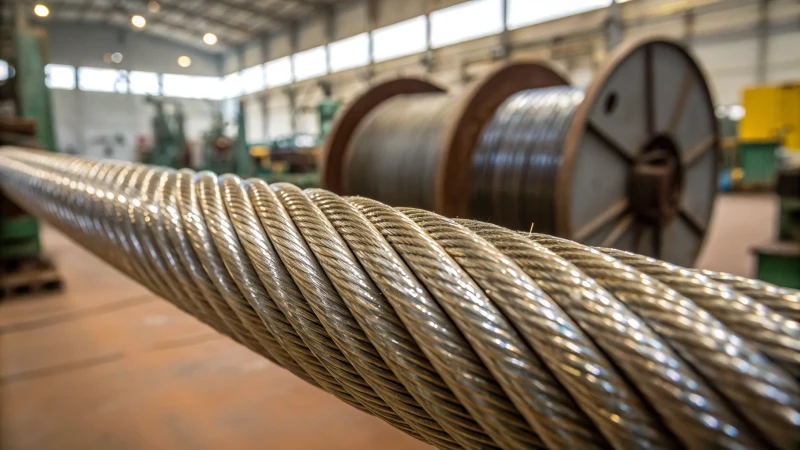
Advanced coatings significantly enhance wire rope performance by boosting wear resistance, reducing fatigue, and shielding against environmental damage like corrosion. Coatings such as galvanization or PVC add a protective layer, extending the rope's lifespan and efficiency.
Enhancing Durability Through Advanced Coatings
When I think about wire ropes, I remember a time during a major construction project when we were racing against the clock. The ropes we used were constantly exposed to the elements, yet they had to remain reliable. This is where advanced coatings made all the difference. These coatings are like a suit of armor for wire ropes, significantly extending their lifespan by protecting against wear and abrasion. Galvanization9, for instance, coats the steel in zinc, forming a barrier against corrosion, while PVC coatings fend off moisture.
Benefits of Galvanized Coatings
One of my colleagues once shared how their team avoided a potential disaster by choosing galvanized ropes for an outdoor project. The zinc layer acted as a shield against moisture and air, drastically cutting down on rust risks.
- Corrosion Resistance: Galvanized wire ropes have a zinc coating that acts as a barrier against moisture and air.
- Enhanced Durability: These ropes are less prone to damage from environmental exposure.
| Coating Type | Key Benefits |
|---|---|
| Galvanized | Corrosion resistance |
| PVC | Moisture and UV protection |
PVC and Nylon Coatings
On another occasion, I was working on a project where the sun was relentless. PVC10 and nylon coatings were lifesavers; they not only protected against moisture but also offered UV protection, preventing surface degradation over time.
Mitigating Fatigue with Nanocoatings
As we pushed the boundaries of what wire ropes could handle, nanocoatings11 came into play. I recall discussing with a supplier about these remarkable coatings that form an ultra-thin layer on the ropes. They help distribute stress evenly across the wire, reducing localized stress points and thereby minimizing wear.
- Even Stress Distribution: Prevents early fatigue by evening out stress across the rope.
- Improved Load Bearing: Enhances the rope's ability to handle heavier loads without compromising safety.
Environmental Protection and Performance Optimization
In industries where exposure to harsh chemicals is unavoidable, polyurethane coatings12 are indispensable. I remember visiting a chemical plant where these coatings proved vital due to their elasticity and resistance to chemical exposures.
- Chemical Resistance: Perfect for industrial settings with prevalent chemical exposure.
- Temperature Tolerance: Maintains performance in varying temperature extremes.
By understanding and selecting the right advanced coating technologies, we can significantly improve wire rope performance. This ensures not only enhanced durability but also considerable cost savings over time due to reduced maintenance and replacement needs.
Galvanized coatings reduce wire rope rust risk.True
The zinc layer in galvanized coatings acts as a barrier against moisture and air.
Nylon coatings provide no UV protection for wire ropes.False
Nylon coatings enhance UV protection, prolonging the rope's functional life.
Conclusion
Wear resistance protects wire ropes from abrasion, while fatigue resistance ensures they endure repeated loads. Both are essential for durability in demanding industrial applications.
-
Exploring high-hardness metals like tungsten carbide reveals how they achieve superior wear resistance. ↩
-
Advanced coating technologies can significantly enhance material durability by reducing friction and corrosion. ↩
-
Innovations in composite materials offer insights into achieving enhanced wear resistance in various industries. ↩
-
Learn how galvanization improves steel wire ropes' durability by enhancing corrosion resistance and stress distribution. ↩
-
Discover how nanocoatings can further enhance fatigue resistance by providing thin protective layers. ↩
-
Learn about the advantages of various stranding patterns to select the best fit for your operational needs. ↩
-
Find out how different coatings enhance wire rope lifespan, crucial for making informed procurement decisions. ↩
-
Explore how cutting-edge nanocoatings are setting new standards in wire rope durability and performance. ↩
-
Learn how galvanized wire ropes offer superior corrosion resistance, enhancing durability for outdoor applications. ↩
-
Discover how PVC coatings provide UV protection and moisture resistance, extending the lifespan of wire ropes. ↩
-
Explore the advantages of nanocoatings in enhancing fatigue resistance and load-bearing capacity of wire ropes. ↩
-
Understand how polyurethane coatings offer chemical resistance and temperature tolerance for industrial applications. ↩